The Complete Guide to Concrete Leveling: Methods and Advantages for a Perfect Foundation
Concrete leveling is a vital but commonly disregarded element of maintaining a property. Various techniques, such as mudjacking and polyurethane injection, can restore uneven surfaces effectively. Property owners stand to gain considerable advantages, ranging from improved safety to maintained property value. Yet, identifying when leveling is needed and choosing the right technique can prove difficult. Gaining insight into the complexities of these methods may uncover benefits beyond mere aesthetic enhancements; it could protect a home's structural foundation for the long term.
Key Facts About Concrete Leveling
Concrete leveling is a critical procedure for preserving the quality and appearance of residential and commercial surfaces. Over time, factors such as soil settlement, weather conditions, and heavy loads can cause concrete slabs to become uneven. This not only compromises the structural stability but can also lead to safety hazards, such as tripping and water pooling. Appreciating the necessity of concrete leveling is crucial for property owners, as it serves to protect the worth and performance of their investments.
Moreover, overlooking irregular surfaces can lead to costly repairs and possible damage to nearby structures. Periodic assessments and prompt interventions can minimize these risks. Property owners should recognize the signs of uneven concrete, including drainage irregularities, cracks, and gaps. Ultimately, understanding the importance of concrete leveling can lead to informed decisions, guaranteeing lasting durability and safety for both residential and commercial properties.
Leading Approaches for Effectively Leveling Concrete
For those pursuing effective concrete leveling, several prominent techniques stand out. Traditional mudjacking presents a well-established method, while polyurethane injection technology brings forward-thinking benefits. Moreover, utilizing self-leveling compounds offers a flexible and adaptable option for achieving a smooth surface.
Mudjacking Process Overview
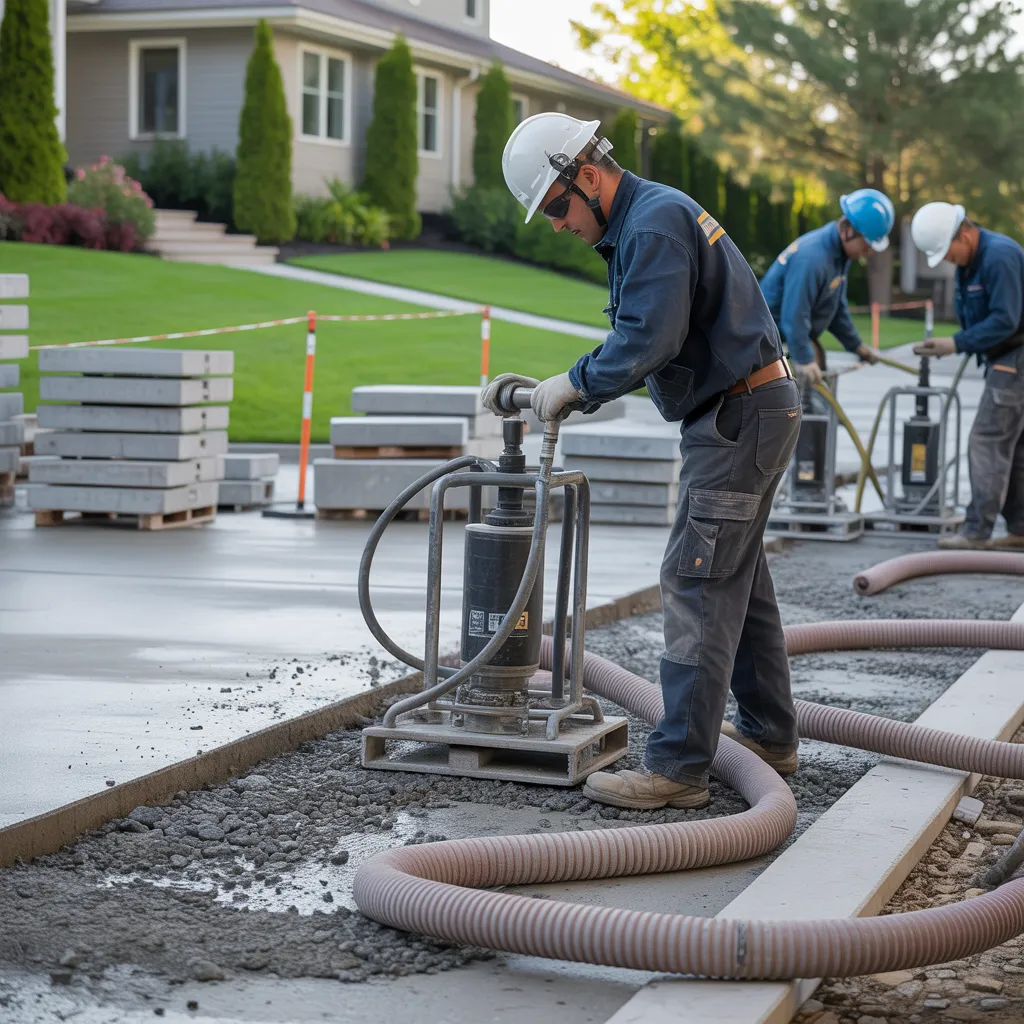
Restoring sunken or uneven concrete surfaces often involves the mudjacking process, an exceptionally reliable technique for leveling. This method entails drilling small holes into the affected concrete slab and injecting a mixture of water, soil, and cement beneath it. As the material is pumped in, it fills voids and raises the slab to its original position. Mudjacking is valued for its economical nature and swiftness, permitting fast repairs with minimal interference. It is most advantageous for patios, driveways, and sidewalks, where irregular surfaces can present safety concerns. By restoring structural integrity and improving aesthetics, mudjacking not only enhances the functionality of concrete surfaces but also prolongs their lifespan, making it a popular choice among homeowners and contractors alike.
Polyurethane Injection Benefits
Polyurethane injection emerges as an innovative approach to resolving irregular concrete slabs, offering numerous advantages over older approaches including mudjacking. This technique involves injecting a lightweight polyurethane foam beneath the concrete, that expands to fill existing voids, efficiently elevating the concrete surface. A notable benefit is its fast curing period, often allowing for use within hours, minimizing disruption. Additionally, polyurethane foam is highly resistant to water, decreasing the likelihood of future sinking. The injection process is also less invasive, necessitating minimal drilling holes and causing reduced impact on the surrounding surface. Furthermore, the light weight of polyurethane eliminates added strain on the ground beneath, ensuring long-lasting results for various concrete structures. Ultimately, polyurethane injection offers a practical, long-lasting, and effective approach to concrete leveling.
Application of Self-Leveling Compound
Attaining a seamless, uniform surface with a self-leveling compound demands careful preparation and application techniques. Initially, the current concrete surface must be completely cleaned to eliminate debris, dust, and grease. Once confirmed the surface is dry, any cracks should be repaired and primed to encourage stronger adhesion. Mixing the self-leveling compound according to the manufacturer's instructions is important; the right consistency ensures optimal flow. Applying the compound in a consistent manner and using a gauge rake can help spread it uniformly. It is important to work quickly, as self-leveling compounds cure fast. In conclusion, allowing the compound to completely cure before applying any flooring material ensures a long-lasting and seamless foundation.
Why Homeowners Benefit from Concrete Leveling
Concrete leveling gives homeowners a reliable method to resolve uneven surfaces that can threaten both safety and curb appeal. One primary benefit is the enhancement of property value; a smooth surface enhances a more visually pleasing home exterior and usable outdoor spaces. Moreover, it lowers the chance of injuries caused by uneven surfaces, creating a safer setting for both residents and visitors.
Additionally, concrete leveling is commonly a affordable option to full slab replacement, saving homeowners both time and money. The method can be done quite efficiently, minimizing interruption to everyday routines. It also helps prevent more damage to the home by correcting root causes, such as moisture penetration and structural instability. By keeping surfaces properly leveled, homeowners can also enhance the lifespan of their patios, driveways, and walkways. In summary, concrete leveling provides a simple means to enhance property value, safety, and aesthetics.
How to Recognize When Concrete Leveling Is Required
Uneven concrete surfaces can manifest in various ways, indicating that leveling is required. Homeowners may notice cracks, gaps, or heaving in driveways, sidewalks, or patios. Standing water collecting in certain spots instead of اعثر على الحقائق draining properly is a telltale sign of an underlying problem. Additionally, heaved or lifted slabs can generate serious tripping risks, endangering both homeowners and their guests.
In basements or garages, uneven flooring can cause issues with installed fixtures or appliances, affecting their functionality. Inspecting for visible signs, like sloped surfaces or divisions between slabs, is essential. Additionally, doors and windows could stick or be unable to close properly as a result of shifting foundations.
Regular assessments of outdoor and indoor concrete can help detect these indicators in a timely manner. Resolving these concerns in a timely fashion guarantees long-term structural integrity and enhances the complete visual appeal and safety of the building.
Selecting the Best Leveling Method for Your Requirements
Selecting the most suitable approach to concrete leveling requires a clear understanding of the different options at hand. Considerations such as the extent of the damage, the kind of surface involved, and financial limitations play a critical role in this selection. By evaluating these considerations, people can establish the most appropriate option for their individual requirements.
Leveling Method Types
When selecting a leveling technique, it is essential to consider the particular requirements of the job, as numerous approaches offer specific strengths and weaknesses. Common methods include mud jacking, where a concrete mixture is forced under slabs to elevate them, and foam injection, which delivers a light, rapid-curing option. Furthermore, grinding removes elevated areas to establish an even surface, while screeding is used for fresh concrete to guarantee an even finish. All methods differ in pricing, efficiency, and appropriateness for specific surface concerns. Ultimately, selecting the most suitable leveling technique copyrights on factors like the severity of the issue, surrounding conditions, and the expected durability of the fix, guaranteeing the best results for any concrete leveling application.
Important Factors To Keep In Mind
Selecting the most suitable leveling technique necessitates a thorough assessment of several key elements that affect the success of the restoration. First, the severity of the damage is essential; slight movement may require only surface-level repairs, while major displacement may necessitate more extensive solutions. Additionally, soil characteristics carry considerable weight; shifting or unstable ground can influence the choice of method. Third, budget constraints must be considered, as different techniques differ in price and durability. Additionally, the designated function of the area should inform the decision, as heavy loads may necessitate reinforced approaches. Lastly, the surrounding environmental elements can influence the selection and longevity of materials, making it essential to assess regional factors before beginning the work.
Steps to Take After Leveling Your Concrete Surface
Following the leveling of a concrete surface, the next steps are fundamental for guaranteeing long-lasting durability and visual appeal. First, it is essential to allow adequate curing time. In most cases, this duration extends from 24 hours to a few days, based on the specific leveling compound applied. In this stage, preserving surface moisture serves to reduce cracking and boost overall durability.
Once cured, sealing the surface is recommended to guard against wear, moisture, and stains. A premium concrete sealer can increase the durability of the surface. Furthermore, adding a finish, such as an epoxy coating or paint, can improve the appearance and performance of the concrete.
Routine upkeep, including cleaning and inspections, is essential to detect and resolve any potential problems before they escalate. Finally, avoiding heavy traffic on the newly leveled surface for a week or more can help maintain its integrity, ensuring that the results of the leveling process remain effective for years to come.
Popular Questions and Answers
What Is the Typical Duration of Concrete Leveling?
The concrete leveling process usually takes anywhere from a few hours to a full day, based on the size of the area and the technique applied. Environmental factors and curing time can further impact how long the entire process takes.
Is Concrete Leveling a DIY Project?
Concrete leveling can be a DIY project, but it requires careful planning and proper tools. Those with experience in home improvement may successfully tackle it, while those new to the task may want to consider expert guidance to guarantee the best results.
What Are the Costs Associated With Concrete Leveling?
Expenses for concrete leveling commonly range from $2 to $10 per square foot, depending on factors like the extent of the damage, materials employed, and area labor rates. Extra costs can result from preliminary work or rental equipment costs.
Can I Step on Leveled Concrete Straight Away?
Walking on newly leveled concrete right away is typically not advised. It generally needs a curing period, permitting the substance to harden correctly. This ensures longevity and avoids deterioration, with timelines varying based on the exact leveling approach employed.
What Materials Are Used in Concrete Leveling?
Concrete leveling generally utilizes supplies such as polymer-modified cement, self-leveling mixtures, and adhesion-enhancing additives. Tools like floats and trowels are also commonly employed to ensure a smooth, even surface during the application.